
Clues
Recently, I’ve been working on the sequel to my murder mystery An Unseen Current. While thematically not that different from my other books (a young person struggles with unusual circumstances while navigating the choppy waters of family, love, and friends), mysteries bring a special level of challenge to the mix. For one thing, people expect clues. Oh, there’s a dead body? Well, writer, where are the clues? Chop, chop! Produce the clues!
However, it’s not just about clues; it’s about when to reveal those clues. Too early and readers are bored because they already solved it. Too late and it seems like the author is cheating and wedging information to justify who the killer is at the last second. Then, even if the writer does pop a clue in the right place, she can’t be too precious about it. The author can’t present it on a silver platter with a neon arrow stating: Clue Here!! To accomplish the correct where and when of clue placement requires a stronger outline than other genres. And that means that I must do what every writer hates doing—not writing.
Outlining and the synopsis are vital to a successful book. But they aren’t the FUN part of writing. The fun part is churning out scenes and spending time with the made up people who populate my brain. Outlining requires problem solving and all the leg work of deciding back stories and motivations and the literal who, what, when, where and why of who was murdered. (It was Professor Plumb in the Library with the Candlestick, in case you were wondering.) But mostly it leaves me thinking: Are we there yet? What about now? Can I start writing now?
So wish me luck as I work out the kinks of how the dead body ended up behind a bar in Anacortes.
You never know what’s beneath the surface.
When Seattle native Tish Yearly finds herself fired and evicted all in one afternoon, she knows she’s in deep water. Unemployed and desperate, the 26 year old ex-actress heads for the one place she knows she’ll be welcome – the house of her cantankerous ex-CIA agent grandfather, Tobias Yearly, in the San Juan Islands. And when she discovers the strangled corpse of Tobias’s best friend, she knows she’s in over her head. Tish is thrown head-long into a mystery that pits her against a handsome but straight-laced Sheriff’s Deputy, a group of eccentric and clannish local residents, and a killer who knows the island far better than she does. Now Tish must swim against the current, depending on her nearly forgotten acting skills and her grandfather’s spy craft, to con a killer and keep them both alive.
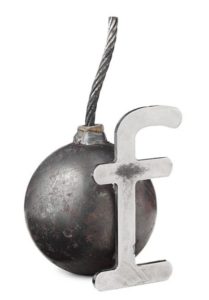 I try not to in public. Much like public displays of affection, I find it inelegant to be assaulted by profanity that I’m not participating in. I think keeping a lid on my foul mouthed habit is only polite and try to reserve it for private situations and friends who have known me long enough to not take offense. As a result, a few of my acquaintances have been surprised to find themselves on the receiving end of a periodic f-bomb. (Yes, I’m the person who should receive this paperweight as a gift.) In the past curbing my tongue has not particularly onerous, but since my child has moved into speaking and comprehending, you know, actual words, life as a purveyor of profanity has become more difficult. Now I can’t even swear in my own home?! Word swaps and humming the Star Spangled Banner do not really help. (Son of a goat monkey, keeping my swearing on the inside is hard!)
 Many comments on profanity seem to insist that profanity is the crutch of mind unable to think of something else to say. I completely disagree. To correctly use profanity one must have an understanding of language that allows you to use the f-word as a verb, a noun, and an adjective. (Yes, it really can – see examples here).
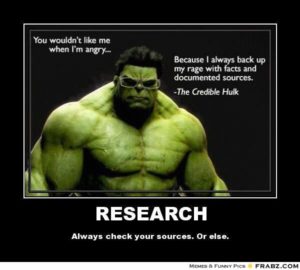 My point? There’s a lot more research that goes into a work of fiction than just what happened to the dead guy. But that research isn’t particularly titillating. It’s simply the stuff we bore you with at cocktail parties. What I find interesting is that almost every person I’ve ever met has been an expert in something, from baking, bagpiping, needlepoint, and cars, to wood working, plumbing, or how the brakes on busses work. I never know when I’m going to need that expertise, but I like to keep track of my various experts. After all, I never know when I’m going to need to know how to crash a bus full of bagpipers. Not that I would ever publically admit to mentally cataloging my acquaintances by how useful they could be to future research…